

A Guide to Runswick Bay and Its Village
A Sheltered Bay and a Village Tucked Beneath the Cliffs
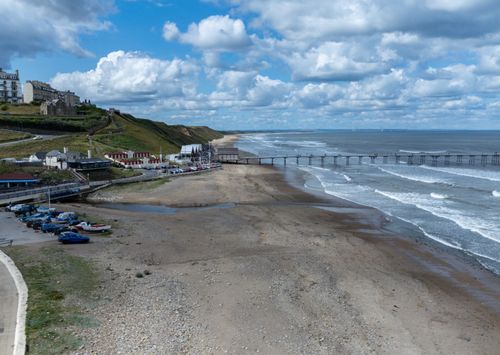
Runswick Bay sits on the North Yorkshire coast about eight miles north of Whitby, and it is one of the few places on this stretch that manages to feel genuinely tucked away. The village clings to the bottom and sides of a steep valley, a jumble of whitewashed cottages, red pantiles and narrow, winding lanes that seem to have grown rather than been planned. Above it, the Cleveland Way threads along the cliff top; below, the bay curves round in a neat half-moon of sand and rock.
The original village was lost to a landslip in 1682 and rebuilt further along the bay, which is why the layout feels so organic. Local legend has it that a cave in the cliffs, Hob Hole, was home to a helpful hobgoblin said to cure whooping cough in children carried down to it. Worth knowing if you are travelling with a cough that refuses to shift, and a nice story to tell on the way down.
Getting There and Getting Down to the Beach
The village is signposted off the A174 between Whitby and Staithes. There is a pay-and-display car park at the top of the bank, and in high summer it fills early — arriving before ten in the morning is sensible, particularly on a bright weekend.
- The path down: steep, stepped in places, and slippery after rain. Good shoes are essential, and the walk back up will remind you of it.
- Accessibility: the descent is not suitable for wheelchairs or pushchairs. Take the road route if you can, and take it slowly.
- What to bring: a bag for wet swimwear, a bucket for rock-pool finds, and cash or a card for the car park.
- Dogs: welcome for much of the year, but check the signage at the top of the bank for seasonal restrictions on sections of the beach.
Rock Pools, Fossils and the Rhythm of the Tide
Runswick's beach is a proper family beach, but its real character comes out at low water. The retreating tide exposes a wide shelf of rock, and the pools here are among the best on this coast — shore crabs, beadlet anemones, limpets, periwinkles, small fish and the occasional brittle star. Take a net with a soft mesh rather than a hard scoop, keep creatures in a bucket of sea water no longer than half an hour, and put everything back exactly where you found it.
This is Jurassic coastline, and the cliffs and fallen blocks are full of fossils. Ammonites, belemnites and shellfish impressions turn up regularly, particularly after a winter storm has brought fresh material down. Collect loose material from the beach rather than hammering at the cliff face, which is unstable and dangerous, and never work directly beneath overhanging rock. The best fossil-hunting is on a falling tide, and it is worth checking tide tables before you set out — at high water the sand shrinks dramatically and the route along the base of the cliffs disappears.
Walks from the Village
- Runswick Bay to Kettleness: north along the Cleveland Way, roughly two miles each way, with big views back over the bay and out to sea. The cliff-edge path is exposed, so keep children and dogs well back.
- Runswick Bay to Staithes: south along the coast path, about four miles, passing Port Mulgrave. A linear walk that rewards you with a proper fishing-village finish.
- The cliff-top loop: a shorter circuit taking in the village, the cliff path and the fields above, ideal for a late afternoon when the light turns golden.
- Village wander: the lanes are a destination in themselves. Give yourself half an hour to get lost in them.
Wildlife Through the Seasons
Grey seals are regularly seen offshore, loafing in the water with just a head showing. Oystercatchers pipe along the shoreline, cormorants dry their wings on the outer rocks, and gulls, fulmars and kittiwakes nest on the cliffs at Kettleness. Look for sea thrift and kidney vetch on the cliff tops in early summer, and for the fast, low flight of a peregrine over the headland.
Spring and early summer bring the best bird activity; autumn delivers dramatic skies and quieter lanes; winter storms reshape the beach and turn up the best fossils. Even in July, Runswick never feels as crowded as Whitby or Scarborough, and out of season you may have the sand almost to yourself.
Eating, Staying and Making a Weekend of It
There is a village pub and a café near the beach for a post-swim cup of tea, plus a sailing club that gives the bay its gentle, working feel. For self-catering, holiday cottages in the village itself are the obvious choice — book well ahead for summer and for the school half-term weeks.
Aim to stay at least two nights. One day for the beach and the rock pools, one for a proper coastal walk, and a slow morning for the village lanes before you leave. Bring layers, bring a windproof, and treat the forecast as a suggestion rather than a promise. Runswick Bay rewards the people who take it at its own pace, and it is all the better for being a little out of the way.
tag: Towns & Villages

Sophie Bramwell Author
Discover family-friendly sands, quiet coves and useful facilities for a relaxed seaside day on the Yorkshire coast, with local tips.
YOU MAY ALSO LIKE
A Guide to the Best Sandy Beaches Near Scarborough
Sep 24
10Step into centuries of monastic life, maritime trade and dramatic clifftop views at one of the coast's most striking landmarks.
read more
Exploring Whitby Abbey and Its Coastal History
Sep 18
10These shorter sections offer clifftop scenery, wildlife spotting and welcoming pubs for walkers with children and pushchairs in mind.
read moreBeaches
-

ERRIC CATONA
From harbour-side takeaways to traditional sit-down restaurants, these coastal spots serve freshly cooked haddock and proper chips daily.
May 19, 2016 at 5.12 pm
Reply
ERRIC CATONA
Make the most of narrow cobbled lanes, rock pools, independent shops and dramatic views over the North Sea.
May 19, 2016 at 5.12 pm
Reply -
ERRIC CATONA
Learn where to join responsible wildlife trips and how to observe marine mammals without causing disturbance to their habitat.
May 19, 2016 at 5.12 pm
Reply
Towns & Villages
Your email address will not be published.